
Strait of Hormuz Security Tightens: War Risk Premiums, Naval Escorts, and the OPEC+ Quota Equilibrium
Strategic assessment of critical maritime transit through the Persian Gulf, escalating tanker insurance costs, and the stabilization of Brent crude around the $74 benchmark.
KEY STRATEGIC TAKEAWAYS (60 SECONDS)
- Core Development: Strategic assessment of critical maritime transit through the Persian Gulf, escalating tanker insurance costs, and the stabilization of Brent crude around the $74 benchmark.
- Strategic Impact: Direct structural realignment across global supply chains, sovereign financial balances, and mission-critical technologies.
- Forward Outlook: Institutional investors, sovereign funds, and policy makers are recalibrating risk exposure and risk hedging frameworks.
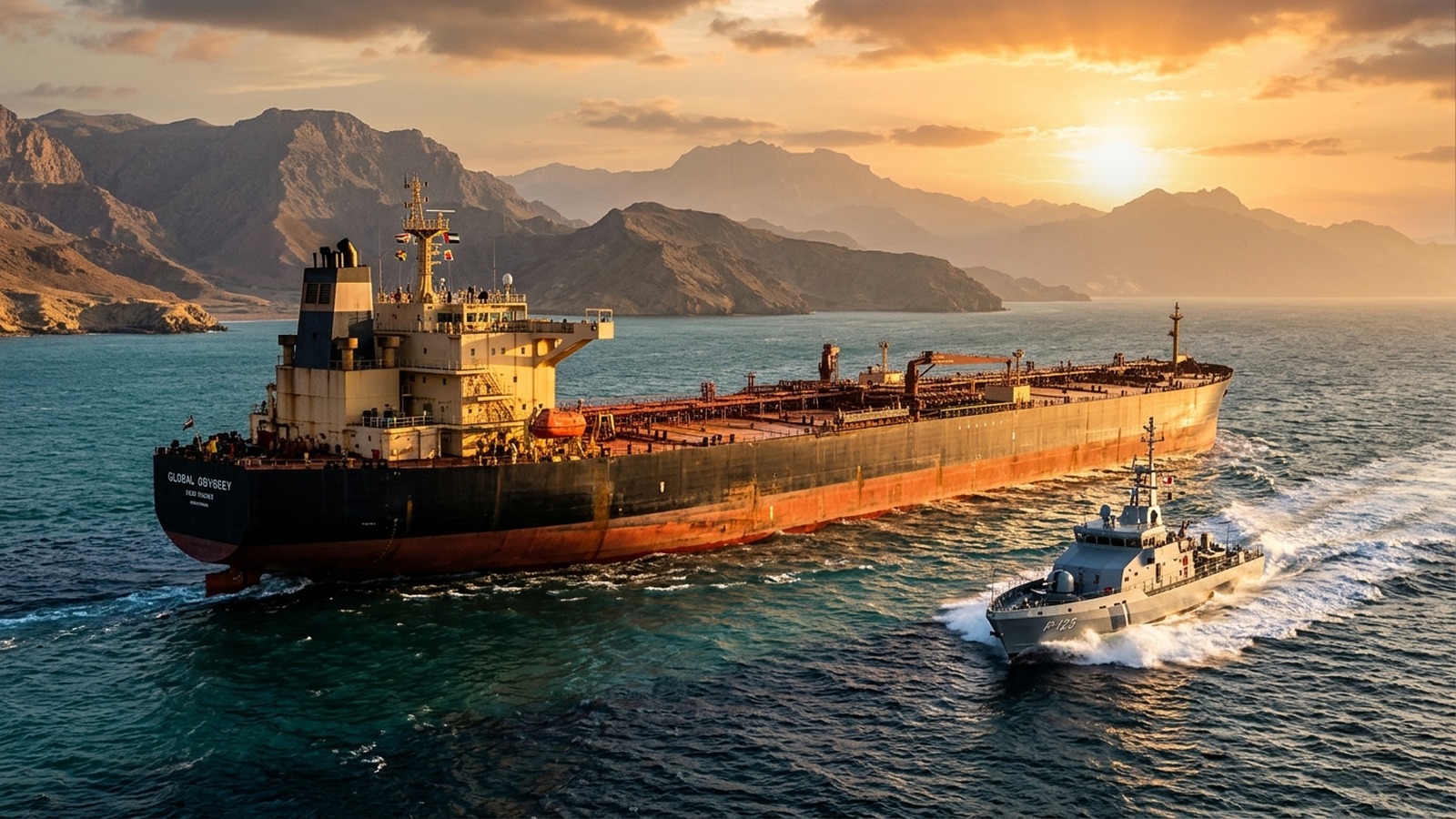
DOHA (News Internacional TEP) — Naval surveillance and bilateral energy talks across the Persian Gulf have entered an intensive phase following enhanced maritime verification protocols across the Strait of Hormuz, the 21-mile-wide chokepoint through which one-fifth of global petroleum liquids transits daily.
War Risk Surcharges and Infrastructure Bypass
The London Joint War Committee’s upward recalibration of marine war risk premiums has triggered an 8% to 12% increase in single-voyage VLCC tanker operating expenditures. In response, regional sovereign exporters have maximized utilization of overland bypass conduits—chiefly the Abu Dhabi Crude Oil Pipeline to Fujairah and the East-West Petroline to Yanbu on the Red Sea—pushing throughput beyond 92% of rated capacity.
The Riyadh Discipline and the $74 Brent Anchor
On the supply side, the OPEC+ alliance has reaffirmed its 2.2 million barrel-per-day voluntary output restrictions, successfully anchoring Brent crude benchmarks near $74 per barrel. This pricing corridor effectively disincentivizes capital over-expansion across US Permian Basin shale producers while securing sovereign fiscal break-evens across Gulf Cooperation Council treasuries.
Simultaneously, Asian refining consortiums in India and China continue expanding term-contract agreements, proactively shielding strategic reserves from spot-market volatility linked to vulnerable maritime chokepoints.
TEP Global Intelligence Dispatch • Direct Wire
Receive institutional macroeconomic alerts, strategic dossiers, and geopolitical risk assessments in real-time.
Cite This Dossier (APA / Harvard Style)
TEP Intelligence Board. (2026). Strait of Hormuz Security Tightens: War Risk Premiums, Naval Escorts, and the OPEC+ Quota Equilibrium. News International TEP. Retrieved from: https://newsinternacionaltep.com/blog/en-2026-11-05-estrecho-ormuz-seguridad-energetica-opep-petroleo-brent/


 GAMING • SCORE 9.6
Monster Hunter Wilds y la Revolución de Ecosistemas Vivos: Telemetría de la Beta y RE Engine
 CINE • SCORE 9.3
Gladiator II y la Apuesta por el Espectáculo Práctico: Desglose de Taquilla y Masterización IMAX
 MÚSICA • SCORE 9.4