
Mass Deployment of Bipedal Humanoid Robots with VLA Models in Manufacturing: Autonomous Assembly and the Robot Tax Debate
Technical and policy monograph on autonomous bipedal humanoids in high-cadence assembly lines: Vision-Language-Action models, 24/7 productivity gains, and OECD regulatory responses.
KEY STRATEGIC TAKEAWAYS (60 SECONDS)
- Core Development: Technical and policy monograph on autonomous bipedal humanoids in high-cadence assembly lines: Vision-Language-Action models, 24/7 productivity gains, and OECD regulatory responses.
- Strategic Impact: Direct structural realignment across global supply chains, sovereign financial balances, and mission-critical technologies.
- Forward Outlook: Institutional investors, sovereign funds, and policy makers are recalibrating risk exposure and risk hedging frameworks.
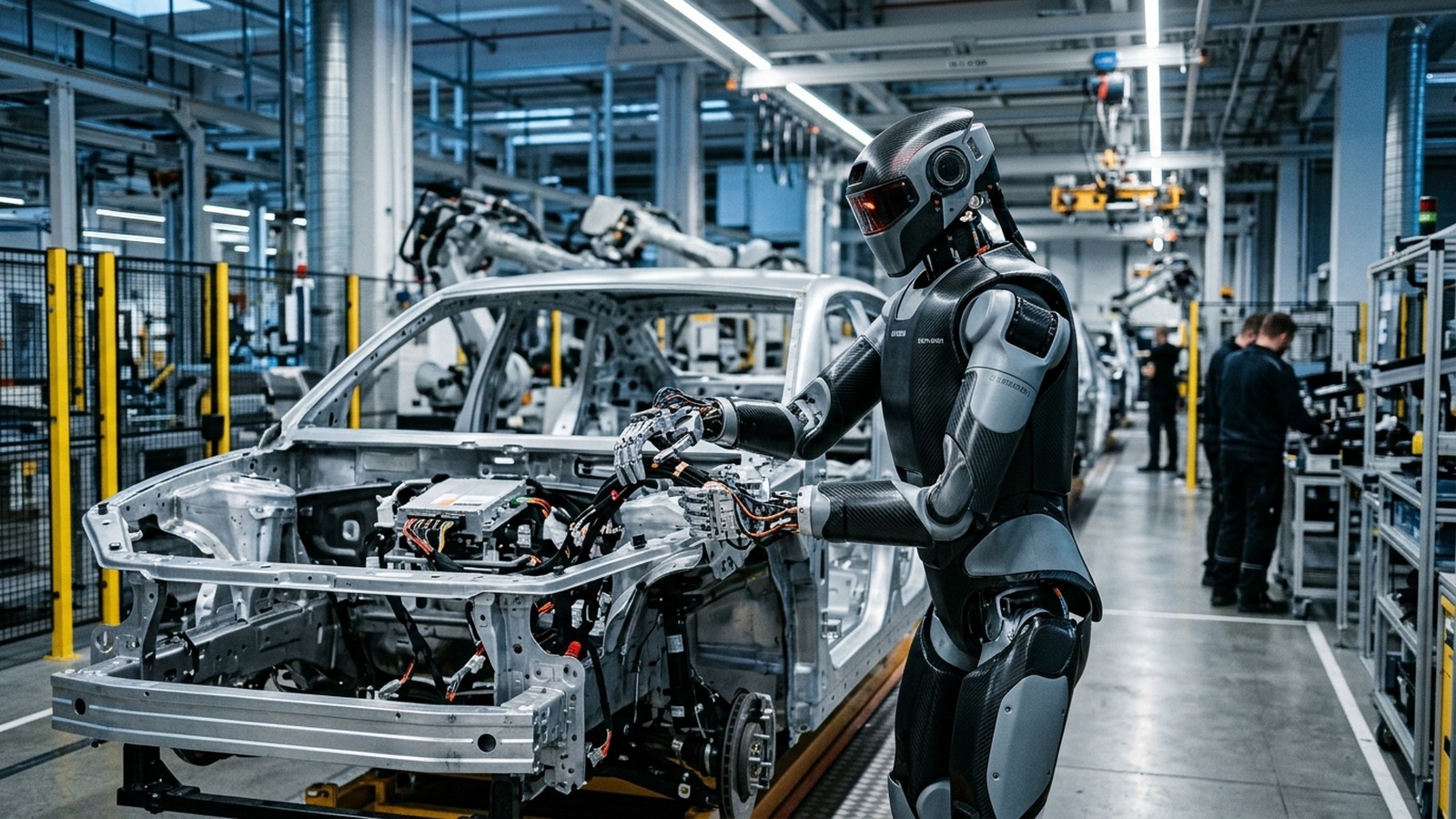
DETROIT / STUTTGART (News International TEP) - Industrial automation has officially reached an irreversible inflection point. Over the past quarter, leading automotive and advanced logistics conglomerates across North America and Europe have transitioned from isolated pilot programs to full-scale continuous production deployments of bipedal humanoid robot fleets powered by Vision-Language-Action (VLA) models.
From Rigid Automation to Fine Dexterity
Unlike traditional robotic arms bolted to factory floors and confined within safety cages, modern bipedal humanoids equipped with 20-DOF dexterous hands work directly within manufacturing cells originally designed for human ergonomics. Driven by multimodal neural networks processing spatial perception and tactile feedback at 100 Hz, these units handle delicate flexible wiring harnesses, seat high-voltage connectors, and inspect sub-millimeter tolerances without human intervention.
Factory managers report a 40% drop in downtime related to repetitive strain injuries. Zero-shot skill transfer from GPU-accelerated physics simulations has reduced the time required to program new assembly workflows from months to hours.
The Fiscal Backlash: Reopening the ‘Robot Tax’ Debate
However, unprecedented operational efficiency has triggered urgent debates across OECD capitals and legislative chambers. Parliamentary committees in Brussels and Washington have reintroduced legislative drafts aimed at establishing automation offset taxes.
Proponents argue that replacing payroll with robotic capital assets erodes the tax foundation supporting public healthcare and pension funds. Industry leaders counter that taxing robotics would cripple domestic competitiveness against highly automated East Asian manufacturing hubs. The debate will fundamentally shape industrial tax policy for the coming generation.
TEP Global Intelligence Dispatch • Direct Wire
Receive institutional macroeconomic alerts, strategic dossiers, and geopolitical risk assessments in real-time.
Cite This Dossier (APA / Harvard Style)
TEP Intelligence Board. (2026). Mass Deployment of Bipedal Humanoid Robots with VLA Models in Manufacturing: Autonomous Assembly and the Robot Tax Debate. News International TEP. Retrieved from: https://newsinternacionaltep.com/blog/en-2026-11-05-robotica-humanoide-bipeda-modelos-vla-manufactura-impuestos/



 GAMING • SCORE 9.6
Monster Hunter Wilds y la Revolución de Ecosistemas Vivos: Telemetría de la Beta y RE Engine
 CINE • SCORE 9.3
Gladiator II y la Apuesta por el Espectáculo Práctico: Desglose de Taquilla y Masterización IMAX
 MÚSICA • SCORE 9.4